
Pond, tank and dam desludging, with the sludge dewatered for disposal.
Eureka Water & Filtration is a Townsville-based desludging and sludge dewatering contractor working across Queensland and in Tasmania. We remove built-up sludge from ponds, lagoons, tanks and dams, then dewater it so the solids can be disposed of and the water returned or treated. We work on council and site water treatment plants, mine sites and industrial sites.
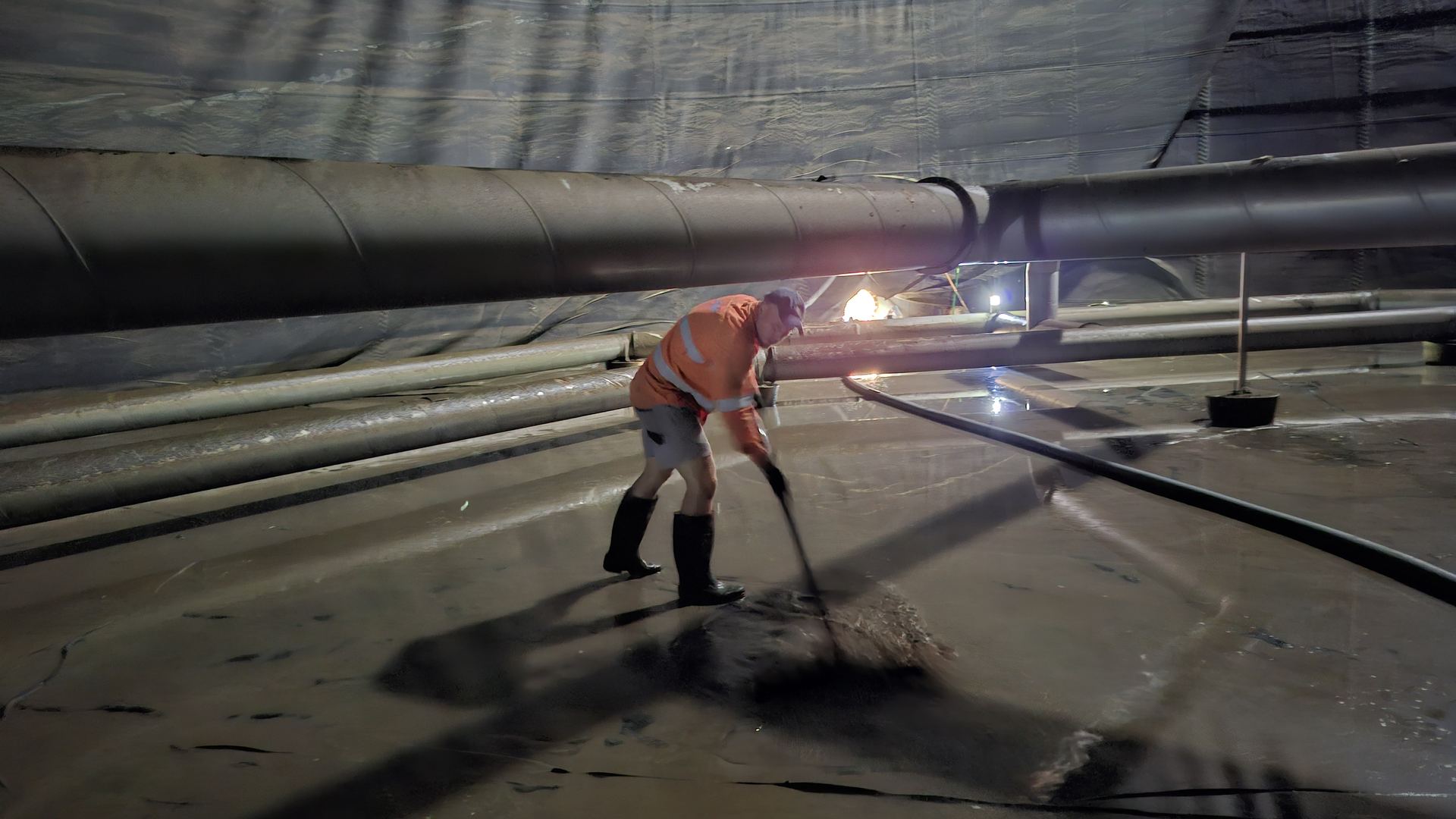
Why desludging matters
Sludge that builds up in a pond or tank takes away working volume, lets solids carry over into treated water and can push a discharge out of its permit limits. Removing it on a planned schedule restores capacity before it becomes a compliance problem.
What we desludge
Sludge lagoons and drying beds
Alum and ferric sludge from council and site water treatment plants.
Sediment and settling ponds
Mine and industrial ponds where solids have reduced storage capacity. Mine water management
Tanks and clarifiers
Settled solids removed from process tanks, clarifiers and storage tanks.
Dams and storages
Sediment removed from dams and water storages, assessed and quoted per job.
How we dewater the sludge
The method depends on the sludge and the water. Dewatering reduces the volume and weight of material leaving site, which cuts transport and disposal costs.
The solids
Separated from the water by filtration, including vacuum disc filters fitted with the right filter cloths. Process filtration
The water
Returned to the process, or treated before discharge with filtration, ion exchange or reverse osmosis, depending on what is in it.
How a desludging job works
Site assessment
We measure sludge depth and volume, sample the material and check access, power and water return points.
Method and quote
A fixed-scope quote covering removal, dewatering, water return and disposal.
Planning
Site-specific SWMS, permits and inductions completed before we mobilise from Townsville.
Desludge and dewater
Sludge removed and dewatered, with water quality checked before return or discharge.
Disposal and reporting
Solids transported and disposed of by us or your own contractor, as agreed, with volumes reported.
Recent desludging work
Emerald, Queensland
Desludging and dewatering, alongside plant servicing.
Clermont, Queensland
Desludging and dewatering, alongside plant repairs and maintenance.
Tasmania
Desludging and dewatering works.
Desludging FAQs
How often should a sludge pond or lagoon be desludged?
It depends on how quickly solids build up. A common trigger is when sludge takes up a set share of the working volume or starts carrying over into treated water. We can measure sludge depth and recommend a schedule.
What is sludge dewatering?
Dewatering separates water from sludge so the solids are smaller, lighter and cheaper to transport and dispose of. The separated water can be returned to the process or treated.
What happens to the water removed from the sludge?
It is returned to the process where possible. If it needs treating first, we use filtration, ion exchange or reverse osmosis depending on what is in it, and check water quality before it is returned or discharged.
Do you work outside Queensland?
Yes. We are based in Townsville and have completed desludging and dewatering work in Tasmania as well as Central Queensland.
Can the plant keep running while you desludge?
In many cases, yes. We plan the work around your operation and agree any bypass or shutdown in advance.
What do you need to quote a desludge?
The pond or tank size, an estimate of sludge depth, what the sludge is from, site access and your timing.
Planning a desludge?
Send us the pond or tank size, an estimate of sludge depth and your timing, and our team will scope it.